

Stablecoin: A Regulated, Euro-Pegged Digital Currency
Willem Hueting (Senior General Manager of GCC) and Wout Cambier (Head of Policy Advice) discuss why this marks a milestone for the European banking sector.
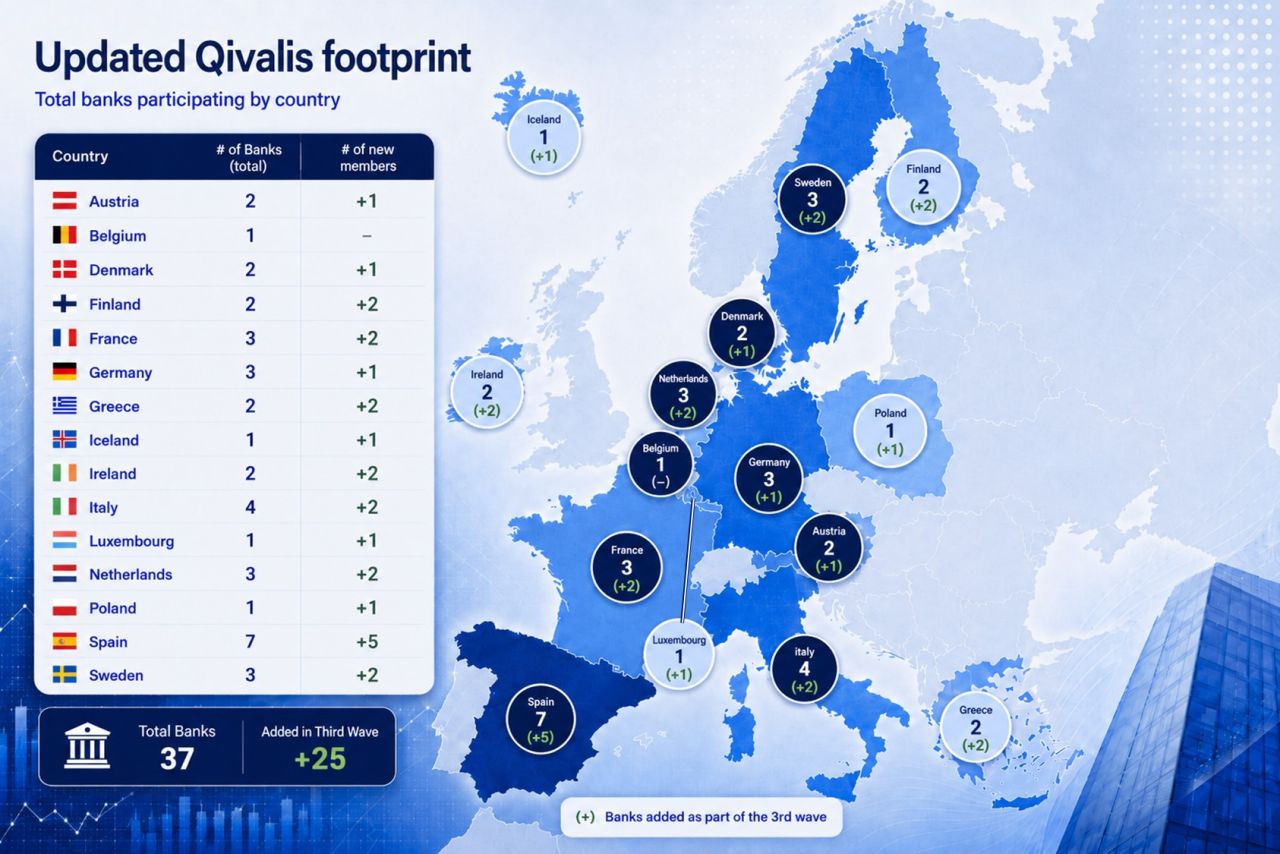
Stablecoins promise a major leap forward in the evolution of digital payments. They represent a new generation of regulated digital money. Unlike the ECB’s digital euro, this initiative is driven by 37 leading European banks, including KBC, and is fully backed by euro-denominated reserves. Each stablecoin is pegged one to-one to the euro, combining the speed and efficiency of blockchain technology with the trust and compliance of traditional banking. The launch is planned for the second half of 2026.
What exactly is a stablecoin?
“Think of a digital token that always equals one euro, backed by bank reserves and designed for fast, secure transactions,” says Wout Cambier. “One stablecoin will always be worth one euro. There’s no volatility, no crypto speculation. The idea is to combine the efficiency and speed of blockchain technology with the reliability of traditional money. By joining forces, we want to offer a trusted, regulated digital euro that enables instant payments across Europe. A stablecoin is also programmable: payments can be automated based on predefined conditions, such as delivery confirmation or time-based triggers. That opens up a wide range of possibilities for businesses, from automatic payments the moment goods arrive to real-time cash-flow visibility and 24/7 intra-group transactions across different time zones.”
“We want to future-proof our services and offer our partners a safe, European alternative."
Willem Hueting, Senior General Manager of GCC
Why is this relevant in Europe now?

This initiative strengthens Europe’s digital sovereignty and reduces dependence on non-European payment infrastructures.“The financial world is digitizing at an incredible pace,” explains Willem Hueting. “We want to future-proof our services and offer our partners a safe, European alternative to solutions that are currently dominated by fintechs or non-European players.
The consortium of 37 European banks is creating a regulated, scalable model that complies with MiCAR. All underlying euros are invested in strictly permitted, highly stable assets. This guarantees value and ensures the coin is reliable for all participating banks.”
Why should people and businesses care about this stablecoin?
“With this coin, payments are faster, cheaper, and more transparent. Imagine settling a cross-border invoice instantly or making a purchase online without waiting days for the money to clear,” says Willem. “For businesses, it means streamlined processes and lower costs. For individuals, it’s about convenience and security.”
Why are banks working together on this?

“A stablecoin only becomes truly useful at scale,” explains Wout. “There are euro stablecoins on the market today, but volumes are small and they’re mostly tied to volatile crypto. By collaborating and opening the infrastructure, introducing our Euro Stablecoin as a utility for all European banks, we’re building a solution that’s relevant for banking, cash management, securities, and trade finance.” Willem adds: “For Europe, this is also strategic. We need to be competitive in digital payment technologies alongside the US and Asia, which strengthens and protects our European interests.”
What use cases do you see for financial institutions?
“We see direct bank-to-bank transactions, available 24/7 with no cut-off times,” says Willem. “Or intra-group transfers, where corporates sometimes wait days for settlement. Stablecoins eliminate that friction.” Wout adds: “For treasury teams, this means real-time liquidity management, tighter cash-flow planning, and lower operational costs.”
What motivates you personally?
“With stablecoin, we’re building the next generation of payments by pairing trust and regulation with innovation,” says Willem. “And we’re helping our clients transition smoothly into the digital future,” adds Wout. “That’s both challenging and highly rewarding.”
“A stablecoin opens up a wide range of possibilities for businesses.”
Wout Cambier, Head of Policy Advice, KBC Global Services